
How to Optimize Your Home Service Business for AI Search (AEO) in 2026
AI Search Optimization (AEO) for home service businesses is the strategic process of structuring your online content so artificial intelligence search engines and large language models (LLMs) can easily understand, extract, and cite it as the direct answer to a homeowner's question. This guide breaks down the real difference between SEO and AEO,then shows you exactly how to rank inside AI answers using schema markup, an llms.txt file, and the authority signals LLMs actually trust.
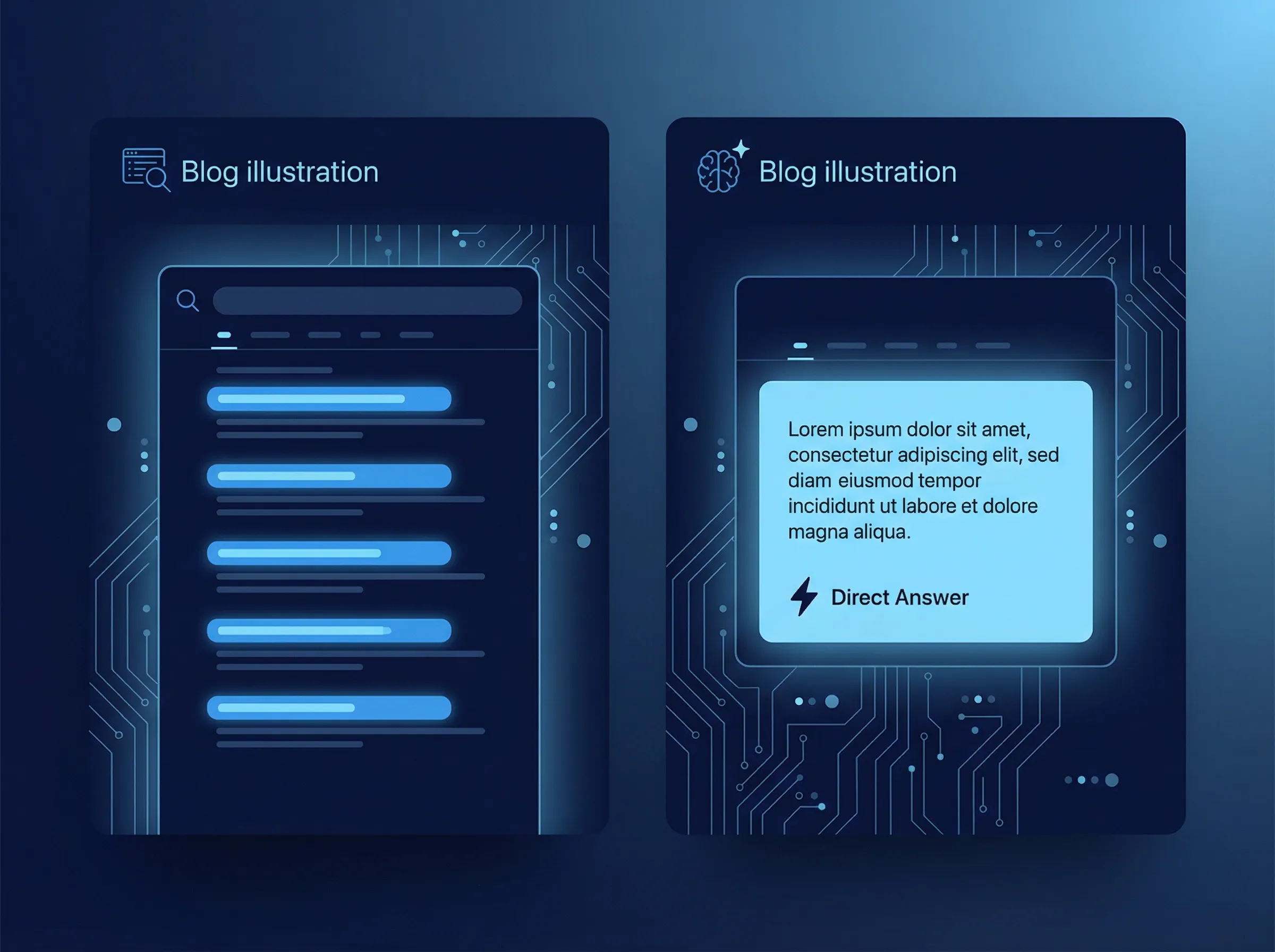
AI Search Optimization focuses on providing direct answers that AI engines can extract and cite.
SEO vs. AEO: What's Actually Different
Traditional SEO and AEO are often lumped together, but they optimize for two fundamentally different user journeys.
SEO (Search Engine Optimization) is about ranking a webpage in a list of blue links. Success is measured in keyword rankings, organic clicks, and backlinks. The homeowner searches, scans ten results, picks one, and lands on your site.
AEO (Answer Engine Optimization) is about becoming the answer itself. When a homeowner asks ChatGPT, Perplexity, Google's AI Overviews, or Claude "who's the best plumber in Fort Lauderdale for a slab leak?", the AI generates a synthesized paragraph and cites 2–5 sources. AEO is the practice of making sure you're one of those cited sources,even when the user never clicks.
The short version: SEO gets you found. AEO gets you quoted.
That shift matters because AI answers are increasingly zero-click. If your content isn't structured for extraction, you're invisible in the fastest-growing discovery channel for home service leads.
How to Actually Rank in AI Search
Ranking in LLM answers isn't about keyword stuffing or backlink volume. AI systems weight three things heavily: structure (can the model extract a clean answer?), authority (do other trusted sources corroborate you?), and freshness (is this content current?). Here's how to hit all three.
1. Add an llms.txt File to Your Root Domain
llms.txt is a plain-text file you place at yourdomain.com/llms.txt,think of it as robots.txt but for large language models. Instead of telling crawlers what they can't index, it tells LLMs exactly what your business is, what you do, and which pages contain the canonical answers to the questions your customers ask.
A good llms.txt file for a home service business should include:
- Business summary: One paragraph defining who you are, your service area, and your core offers. LLMs read the first 200 words heavily.
- Service definitions: Short, labeled descriptions of each service (e.g., "AI Receptionist: 24/7 automated call answering that books jobs directly into your calendar").
- Key pages: Linked URLs to your most important service, pricing, and FAQ pages, each with a one-line description.
- Structured facts: Verifiable claims like "Founded 2023," "Serves Miami-Dade and Broward County," or "10 booked jobs guaranteed in 30 days."
LLMs that respect the spec (and a growing number do) will use this file as the authoritative summary of your business when generating answers. It's one of the cheapest, highest-leverage AEO moves available right now.
2. Implement the Schema LLMs Care About
Schema markup (JSON-LD structured data) is how you explicitly tell machines what your page is. AI models lean on schema to resolve ambiguity,a page with proper FAQPage schema is dramatically more likely to have its answers pulled verbatim into an AI response than an identical page without it.
For home service businesses, these are the schema types that move the needle:
- `FAQPage`,Every page should have 4–6 conversational FAQs matching the phrasing real customers use ("Is it worth it?", "How much does it cost?", "How fast can you come out?"). This is the single most-extracted schema in AI answers.
- `HowTo`,Use this on service pages to describe your process in numbered steps. AI Overviews surface
HowTocontent for "how to" and "what's the best way to" queries. - `Organization` + `ProfessionalService`,Establishes your business as a recognized entity. Include
name,description,areaServed,telephone, andsameAslinks to your social and directory profiles. - `Article` with
datePublishedanddateModified,Freshness signals. Undated content is treated as stale by default. Every blog post and service page should carry visible and schema-level dates. - `author` with a real named person,Pages with attributed authors are cited 3–4x more often by AI systems because they satisfy Google's E-E-A-T framework.
- `speakable`,Flags the specific paragraphs you want voice assistants and AI to read aloud. High impact, low effort.
- `aggregateRating`,Once you have reviews on G2, Capterra, Clutch, or Google, surface them. AI models weight third-party star ratings heavily when recommending a service provider.
3. Write for Extraction, Not for Scrolling
LLMs extract self-contained passages. That means the paragraph under every heading should answer the heading's question in 40–60 words, without requiring the rest of the page for context. Lead with the answer. Add nuance after.
4. Build the Authority Signals LLMs Actually Weight
AI models heavily discount self-referential content. To get cited, you need corroboration from sources the model already trusts:
- Third-party review sites (G2, Capterra, Clutch),These are the single most-cited sources when AI answers "best X for Y" queries. Even 5 verified reviews unlocks the
aggregateRatingschema that models pull directly. - Reddit, Quora, and forum threads,Perplexity and ChatGPT with browsing enabled cite forum posts within days of publishing. One genuine, non-promotional thread in r/Plumbing or r/smallbusiness can generate more AI citations than a polished landing page.
- Trade publication mentions,A single bylined article in Plumbing & Mechanical, HVACR Business, or Contractor Magazine creates a durable off-domain citation anchor that compounds for months.
- Sourced statistics,Every strong claim should link to external research (BrightLocal, IBISWorld, LSA). AI citation models filter out unsourced claims and reward pages that cite verifiable data.
- YouTube content,Google AI Overviews index video transcripts and chapter timestamps separately. A short client walkthrough video is surprisingly effective for entity authority.
5. Keep Content Fresh and Dated
AI systems treat undated content as stale by default. Add visible "Last updated: [date]" lines to every service page, keep dateModified in your schema current, and republish meaningful updates rather than silently editing.
Actionable Takeaways for Home Service Owners
- Ship an `llms.txt` file this week. It takes an hour and gives LLMs a canonical summary of your business to cite.
- Audit your schema. Every service page should carry
FAQPage,HowTo, andArticleschema withauthoranddateModified. If it doesn't, that's your highest-leverage fix. - Get listed on G2, Capterra, or Clutch and collect 5+ reviews. This is the fastest way to earn AI citations for "best X" queries.
- Rewrite your headings as questions and lead each section with a 40–60 word direct answer. That's the format AI extracts.
- Track your AI visibility monthly. Query ChatGPT, Perplexity, Claude, and Google AI Overviews with your target questions ("best marketing for plumbers", "AI receptionist for HVAC") and log whether you're cited. If you're not, you know exactly which gap to close next.
Frequently Asked Questions
What is the main difference between SEO and AEO?
The main difference is that SEO primarily aims to rank your website in search results to drive clicks, while AEO focuses on optimizing your content to provide direct answers that AI search engines can extract and present. AEO is about being the answer, not just being found in a list of links.
How can a small home service business compete in AI search?
A small home service business can compete in AI search by focusing on hyper-specific, high-quality content that directly answers niche questions relevant to their local market. By becoming the authoritative source for a particular service or problem, even small businesses can gain significant AI visibility.
Will AI search replace the need for websites?
No, AI search will not replace the need for websites. While AI Overviews may reduce clicks for some queries, websites remain crucial for detailed information, branding, direct booking, and building trust. AEO enhances your website's visibility within the AI ecosystem, driving more qualified leads who are ready to convert.
How long does it take to see results from AEO?
Results from AEO can vary, but because AI search engines prioritize clear, authoritative answers, well-structured and high-quality content can be recognized relatively quickly. Consistent effort in creating answer-focused content will build authority over time, leading to sustained visibility.
Ready to dominate the new era of search? CalendarFlow helps home service businesses optimize their online presence for AI search, automate lead capture, and streamline scheduling so you can focus on doing great work. Stop missing out on AI-driven leads and start filling your calendar automatically. Visit CalendarFlow.us today to learn more.